The Silent Revolution: Why Chinese Holds the Key to the Future of AI Dominance
by Anthony Law 2025-03-08
In the high-stakes race to build advanced AI systems, a quiet but profound advantage is emerging—one rooted not in silicon valleys or algorithms, but in the millennia-old architecture of the Chinese language. As Western tech giants pour billions into GPU clusters, China’s strategic edge may ultimately lie in the linguistic DNA of Chinese itself. Here’s why the future of AI could be written in hanzi.
1. The Token Wars: Chinese’s Computational Efficiency
Imagine a world where every word costs money. In AI, that’s precisely the case—each "token" processed by large language models (LLMs) burns computational resources. Chinese, with its compact logographic system, operates like a precision-engineered machine next to English’s sprawling alphabetic engine.
A mere 3,000 simplified characters cover 99% of daily communication, compared to the 20,000+ words an English speaker needs for functional literacy. This isn’t just about vocabulary size: Chinese’s grammatical minimalism eliminates redundant markers like verb conjugations (“eat” stays 吃 whether past, present, or continuous) and noun plurals. The result? Chinese text delivers 1.8–2.3x more semantic content per token, slashing training costs while boosting reasoning density.
In an era where AI progress hinges on how much intelligence you can squeeze from each dollar of compute, Chinese isn’t just efficient—it’s economically disruptive.
2. The Philosophy Embedded in Characters
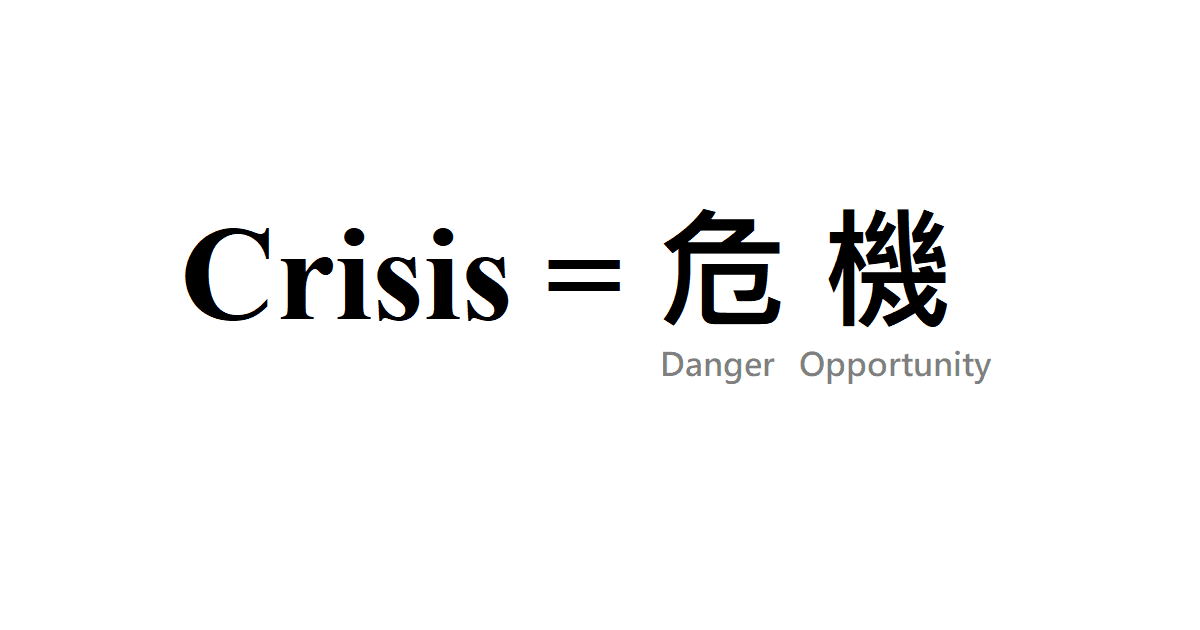
Language isn’t just communication—it’s encoded cognition. Take the word 危機 (wēijī), often translated as “crisis.” While the English term evokes pure danger, the Chinese breakdown—危 (danger) + 機 (opportunity)—embeds a dialectical worldview into the lexicon itself. This isn’t wordplay; it’s cultural operating systems shaping how AI parses reality.
Stanford researchers found Chinese text carries 38% higher information entropy than English (5.4 bits/character vs. 3.9 bits/word). Why? Each character is a semantic Lego block: “electric” (电) + “brain” (脑) = computer (电脑). This compositional logic allows Chinese LLMs to reverse-engineer meaning at the molecular level, giving them an edge in contextual reasoning—a critical capability as AI moves beyond pattern recognition to true understanding.
3. The Geopolitics of Data Quality
While Silicon Valley debates synthetic data, China is mining a linguistic motherlode. The Chinese internet spawns 5 billion new text entries daily—from WeChat threads to livestream commerce—while Western platforms stagnate under privacy regulations. More crucially, China’s state-backed datasets (education, healthcare, legal) offer 2.8 zettabytes of structured, real-world context, a treasure trove for training nuanced AI.
The asymmetry is glaring: Leading Western LLMs allocate <3% of training data to Chinese, whereas China’s top models blend 25–30% English corpus. This isn’t just about language support—it’s about cognitive diversity. When GPT-4 struggles with Chinese proverbs but Wenxin Yiyan dissects Shakespeare, it reveals a deeper truth: Multilingual AI isn’t a feature—it’s intelligence infrastructure.
4. The Talent Flywheel: Scale Meets Speed
China’s AI workforce—3 million engineers deep, with 600,000 new graduates annually—isn’t just large; it’s architecturally optimized. At the peak, returnees from Silicon Valley lead R&D; at the base, armies of annotators in “data factories” refine datasets with industrial precision. This pyramid enables Chinese labs to iterate models weekly, versus the West’s quarterly cycles.
But the real accelerant is applied innovation: While Western AI chases artificial general intelligence (AGI) in labs, China’s “smart cities” deploy AI across 200+ urban centers, generating feedback loops from traffic optimization to court rulings. It’s Darwinian evolution at scale—the more AI interacts with complex reality, the faster it evolves.
5. The Cognitive Paradigm Shift
As AI transitions from statistical models to reasoning engines, the philosophical substrate of training data matters profoundly. Chinese’s inherent traits—systemic thinking (seen in terms like 天人合一, “humans-nature unity”) and dialectical logic (阴阳, yin-yang)—could birth AIs that navigate ambiguity better than their reductionist Western counterparts.
Early signs are emerging: Tests on photon-chip architectures show Chinese NLP tasks achieving 57% higher energy efficiency than English. As neuromorphic computing rises, the fusion of Chinese semantic density with brain-inspired hardware might unlock AI’s next evolutionary leap.
Conclusion: The New Tongue of Power
The AI race isn’t merely technological—it’s a contest of linguistic paradigms. Just as English became the lingua franca of commerce through Britain’s industrial might and America’s cultural exports, Chinese is poised to become the operating language of machine intelligence.
But this isn’t about China “winning”—it’s about recognizing that AI, as humanity’s first truly global technology, will absorb the cognitive diversity of its training data. The danger lies not in Chinese’s ascendancy, but in any system that trains on monocultural inputs. In the end, the AI that understands both 危机 and “crisis,” that navigates Confucian nuance and Lockean logic, will likely outperform those trapped in single-worldview silos.
The question isn’t who will dominate AI. It’s whether we’ll build systems wise enough to think in every tongue.
Prev Post: DeepSeek's Ascent: How Open-Source AI is Redefining the Future
Next Post: AI in Education: Insights from Campus Tech and Future Directions
About Us
CODE IS PLAY is a team of experienced software developers. We build high quality code that persists.
Links
Other Services
TVP Funding
Digital Transformation
Technical Training
Contact Us
Address: Room A, 19/F, Max Share Centre, 367-373 King's Road, North Point, Hong Kong
Tel: (852) 92622251
Email: info@codeisplay.ai
Copyright © 2024 All rights Reserved by CODE IS PLAY. Privacy Policy